Showing posts with label music. Show all posts

Friday, May 30, 2014

Summer of Summer: wait, summer comes with bugs?

One of my favorite sights - Overlook Mountain from the Saugerties exit off 87

In a stroke of dumb luck, our favorite cottage in Saugerties was unclaimed for the Memorial Day weekend, so that is where we headed. Saturday we had mostly crummy weather, and I drowned two spiders in the shower stall and picked up a tick just by sitting on a bench in the back yard. It's been so long since my grassy childhood that I had forgotten what total assholes ticks are. They serve absolutely no purpose other than to feast on blood and be disgusting. Seriously, screw the little bastards.

On Sunday, we broke out the hiking boots we got for Argentina, and headed for Catskill Park, and the North Mountain hike. Allen had printed out a highly detailed trail guide, which explained to us that the beginning of the trail would have some rocks and water, but that it would improve after that. "After that" turned out to be at approximately the 46% point, because this trail followed a creek bed, which was sometimes more dry and sometimes very much less dry, the entire way. We squelched through mud and clambered over rocks like loudly complaining mountain goats. But still, this was our reward:


That teeny blue ribbon on the left is the Hudson.

The top of Ashley Falls

On Monday, we rested. Or, we meant to. And then poor Allen stepped barefoot on a wasp while setting out our breakfast dishes inside the cottage, which again brought back long-buried childhood memories of needle-like pain and itchy swelling and baking soda plasters. And what I realized is, I romanticize the country, but that's because I've mostly forgotten how god damn BUGGY it is. Shower spiders, lawn ticks, floor-dwelling indoor wasps... and that's not even mentioning the mosquitoes. After breakfast, we parked ourselves on the shady deck with book (me), laptop (him), and beer, and remained blissfully unmolested the rest of the day.


Yes, his T-shirt says "The Lannisters" on it.

My read was Emily Giffin's newest, THE ONE AND ONLY. Texas, football, and divided loyalty under one gorgeous cover... what's not to love?


Your tune: vintage 80's Journey, thematic to the book and intended by God to be blasted at ruthless volume on sun-soaked pool decks: "Girl Can't Help It." Follow your heart, gang. Steve Perry would never lead you astray.


Thursday, October 24, 2013

Ritual and memory and stained-glass leaves.

It's a known fact among my family and friends that I can be counted upon to repeat myself. I am a creature of ritual, most especially when it comes to family gatherings... the mystery of the new is often overshadowed by the comfort of the familiar.

One of my very favorite traditions is the annual fall Woodstock weekend that my husband and I spend with his brother and sister-in-law. The first year was actually a late summer gathering, but I, mountain-bred girl that I am, needed a fall weekend with time spent among hills patchworked with gold and green and orange, and the rush of wind in glowing leaves over my head. So I co-opted the weekend from August to October. Two years ago, the weekend took place days after we got engaged; last year, it was the weekend of our wedding. This time (our fifth year) was our first anniversary.

Every year we do the same activities (flea market, apple picking) and visit the same restaurants, and that process of layering year after year of similar memories on top of one another is just the most magical thing. "Was it the wedding house or the mountain view house that had the crazy staircase?" "Do you remember when we were packing up after the wedding weekend and there was that insane ladybug swarm?" And of course, "What year was it that Bethany got baked for the first time?" (Some day I will tell you guys that story.)

So this year we did old things and new things, both of them equally precious. New layers of memory were added to the pile: the morning hour I spent alone on the balcony at the house, listening to the wind in the golden trees; the sweetness of the port that the owner of our wedding venue gave us with our anniversary dinner. The fire we built and proudly maintained until four o'clock in the morning.

If you really want to feel the mood, click this link and listen to the most exquisite country-folk harmony ever recorded by a pair of Swedish girls: http://www.youtube.com/watch?v=PC57z-oDPLs

This was our fireside, where we sat up late listening to music and laughing and telling stories:


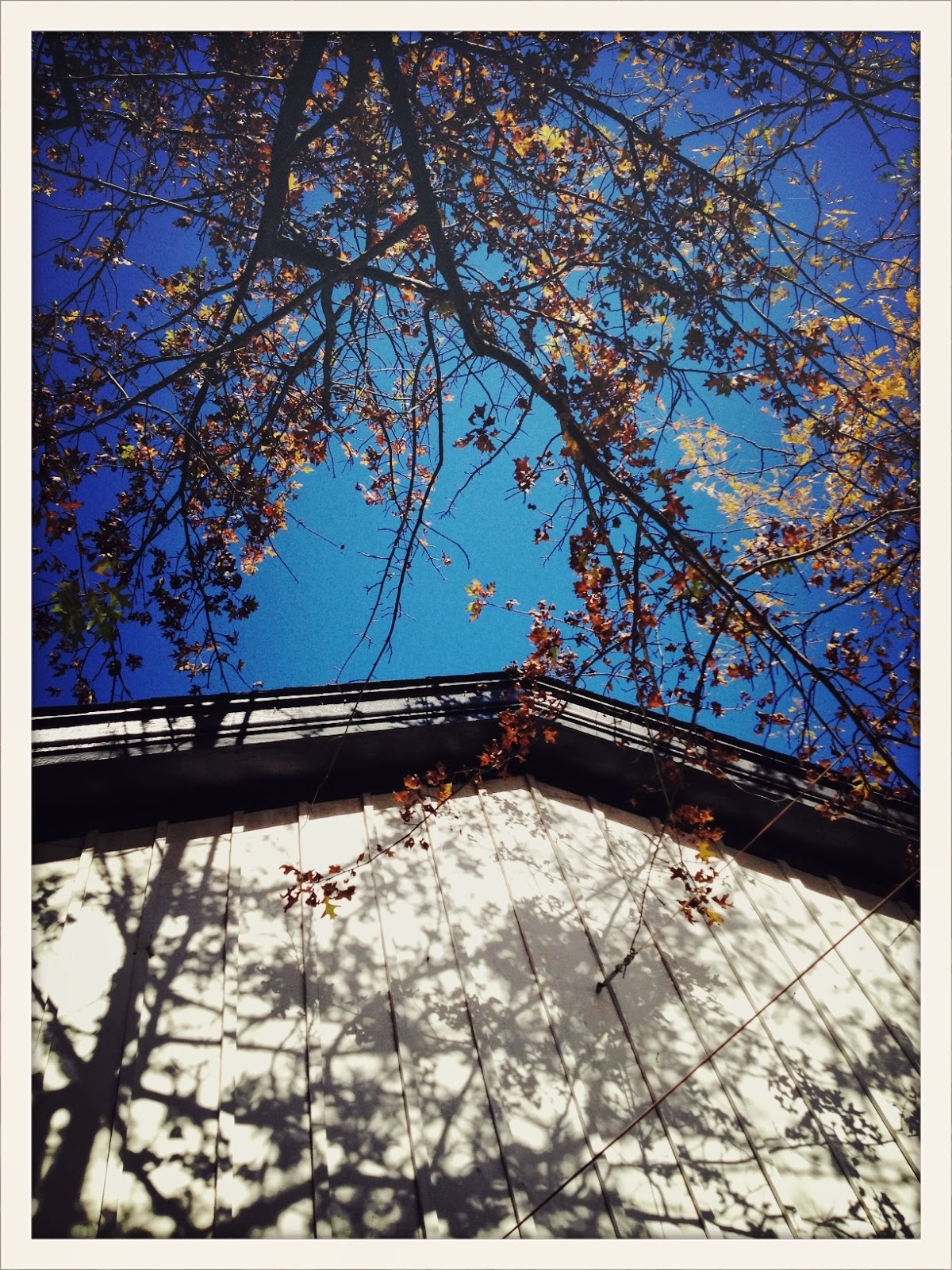
And then we woke up the next morning in our little mountain house to these leaves: 


And then went for a ramble around town:


Woodstock Flea Market

My dream house, on Rock City Road 

 And then slowly drove home the next day, stopping for apples and donuts and whiskey and wine.

Dressel Farms

this year's haul

Tuthilltown Distillery

Brotherhood Winery


It was a perfect, magical weekend, the way each of them has been. And as soon as the vibrancy of the leaves fades from my eyes, I will be looking forward to the next year.


Monday, April 29, 2013

Better Fiction through Songwriting: Kacey Musgraves


I was hanging out with a dear friend recently, helping her pick out a couch for her apartment (this is the one way in the world in which I am useful to my friends, unlike my friend the veterinarian or my friend the chef), and she played me some songs by great new country artist Kacey Musgraves. "You're going to love her," my friend said. "I just saw an interview with her where she said one of her favorite artists is John Prine."

And boy, can you tell. Not just from the song whose chorus goes, "my idea of heaven is to burn one with John Prine"--although, yes, Kacey, I agree with you--but in her incisive portrait of small town claustrophobia, "Merry Go 'Round:"


If you ain't got two kids by 21,
You're probably gonna die alone
At least that's what tradition told you.
And it don't matter if you don't believe,
Come Sunday morning you best be there
In the front row, like you're s'posed to.
Same hurt in every heart.
Same trailer, different park.

Mama’s hooked on Mary Kay
Brother’s hooked on Mary Jane
And Daddy's hooked on Mary two doors down.
Mary Mary quite contrary,
We get bored so we get married
And just like dust we settle in this town.
On this broken merry go 'round and 'round and 'round we go,
Where it stops nobody knows...
And it ain't slowin' down, this merry go 'round...

We think the first time's good enough,
So we hold on to high school love,
Say we won't end up like our parents.
Tiny little boxes in a row,
Ain't what you want it's what you know,
Just happy in the shoes you're wearin'.
Same checks we're always cashin',
To buy a little more distraction.

-chorus-

Mary Mary quite contrary,
We're so bored until we're buried.
And just like dust we settle in this town.
On this broken merry go 'round...
Merry go 'round...

Jack and Jill went up the hill,
Jack burned out on booze and pills,
And Mary had a little lamb,
Mary just don't give a damn no more.

One thing I love in particular about this song is the repetition of the three "hooked" lines: two short lines, rhyming, same rhythmic pattern, then punctuated by the longer, non-rhyming line that drives home the saddest idea of all three. I think rhythm is one of the most important things we can pay attention to, as writers. You often see the advice to read your writing aloud, and while that's partly to help you make sure nothing sounds stilted or awkward, it's also encouraging you to be aware of the flow you can create through the rhythm of your words. The pauses and beats within a sentence, and the variation between long sentences and short ones. The rhythmic structure of well-written songs can be a great tool to help train yourself to be even more aware of that.


Sunday, April 7, 2013

Better Fiction through Songwriting: John Prine and the Vietnam War

D.R. Howe treats the wounds of Private First Class D. A. Crum

I've been reading a great deal of advice about writing craft lately, and one of the most important points I see over and over again is to make every word matter. Choose specific, powerful words, and make every single one of them work hard for its place on your page. All of the fuzz, anything that isn't serving a deliberate purpose, gets cut out. (Chuck Wendig compares this to a dentist picking away at every particle of accumulated gunk on a set of gleaming chompers.)

It occurred to me that one of the best possible examples of this idea--and of its equally often-repeated cousin, "show don't tell"--can be found in songwriting. When you have a whole book, or a whole story, it can be easy to let yourself get a little lazy; but the brevity and strict rhythmic pattern demanded by a song forces an economy of words that, in the hands of a gifted artist, can create a truly astonishing result.

Bob Dylan is often cited as one of the best songwriters of all time, and rightfully so--but one thing he wasn't always, was concise. Plenty of his songs ramble through a few too many verses. My own personal favorite songwriter is a contemporary of Dylan's, who never achieved the same level of commercial success, but who has a body of work that comprises some of the most beautiful, heartbreaking, insightful songs I've ever heard: John Prine. This is particularly true of the songs, and even a few individual lyrics, in which he references the Vietnam War--plenty of despairing, angry people wrote music about that war, but nobody did it quite like Prine. Especially when combined with his simple melodies and spare guitar chords, the power of those perfectly-chosen words is marvel.

First you have "Donald and Lydia:"

Bunk beds, shaved heads, Saturday night,
A warehouse of strangers with sixty watt lights.
Staring through the ceiling, just wanting to be
Lay one of too many, a young PFC: Donald

There were spaces between Donald and whatever he said

Strangers had forced him to live in his head
He envisioned the details of romantic scenes
After midnight in the stillness of the barracks latrine.

Two short verses, and you have an indictment of the war machine that endlessly and greedily devoured young men; a compelling snapshot of the isolation and displacement of a fairly new recruit (he doesn't say soldier, he says "PFC," emphasizing that Donald is a junior enlisted, most likely drafted); and a deft characterization of a lonely dreamer who was never cut out for Army life in the first place. It's incredibly masterful.

Then the chorus of "Your Flag Decal Won't Get You into HeavenAnymore," with its barbed commentary on brainless knee-jerk jingoism:


But your flag decal won't get you
Into Heaven any more.
They're already overcrowded
From your dirty little war.
Now Jesus don't like killin'
No matter what the reason's for,
And your flag decal won't get you
Into Heaven any more. 

Then, in its entirety, "Sam Stone," which I've been listening to for a good 15 years, and which still gives me chills every time: the anger, the compassion, the grief for all those pointlessly ruined lives, that went into these words.

Sam Stone came home to his wife and family
After serving in the conflict overseas
And the time that he served had shattered all his nerves
And left a little shrapnel in his knee
But the morphine eased the pain
And the grass grew round his brain
And gave him all the confidence he lacked
With a purple heart and a monkey on his back

There's a hole in daddy's arm where all the money goes
Jesus Christ died for nothin' I suppose
Little pitchers have big ears, don't stop to count the years
Sweet songs never last too long on broken radios

Sam Stone's welcome home didn't last too long
He went to work when he'd spent his last dime
And Sammy took to stealing when he got that empty feeling
For a hundred dollar habit without overtime
And the gold rolled through his veins
Like a thousand railroad trains
And eased his mind in the hours that he chose
While the kids ran around wearin' other peoples' clothes

-chorus-

Sam Stone was alone when he popped his last balloon
Climbing walls while sitting in a chair
Well, he played his last request while the room smelled just like death
With an overdose hovering in the air
But life had lost its fun
And there was nothing to be done
But trade his house that he bought on the G. I. Bill
For a flag draped casket on a local heroes' hill

-chorus-

It's simply one of the best-written songs I've ever heard. Every line is spare, restrained, with a handful of evocative words. But it's the last two lines of the last verse that are the most powerful for me: the deliberate pairing of the G.I. Bill, with its promise of prosperity and stability for veterans, against the image of the flag-draped casket. The brutal bait-and-switch of military life for so many young men of that era. Prine is a master. I've loved him since I was a teenager but now, as I refine my own writing skill, his work is relevant for me in a whole new way--and I'm looking forward to listening again, from that perspective.